In a recent video, Texitcoin (TXC) founder Bobby Gray explains the new Downtown Digital Dollars business. The concept is highly flawed and likely doomed for failure. This article will analyze the entire concept.
Is it Legal?
In the video Bobby uses an example for McKinney, Texas and MCK tokens. In this article I will use that example as well. In the video the founder explains the background of community currencies and walks through an example of the town of McKinney Texas where he creates 27,789.89 MCK tokens which are intended to represent $1 of value. In the example, 95.22% of the tokens are backed with USDC as he shows a balance of 26452.10 USDC. While he does not use the term stablecoin explicitly, it likely meets the statutory definition per ChatGPT.
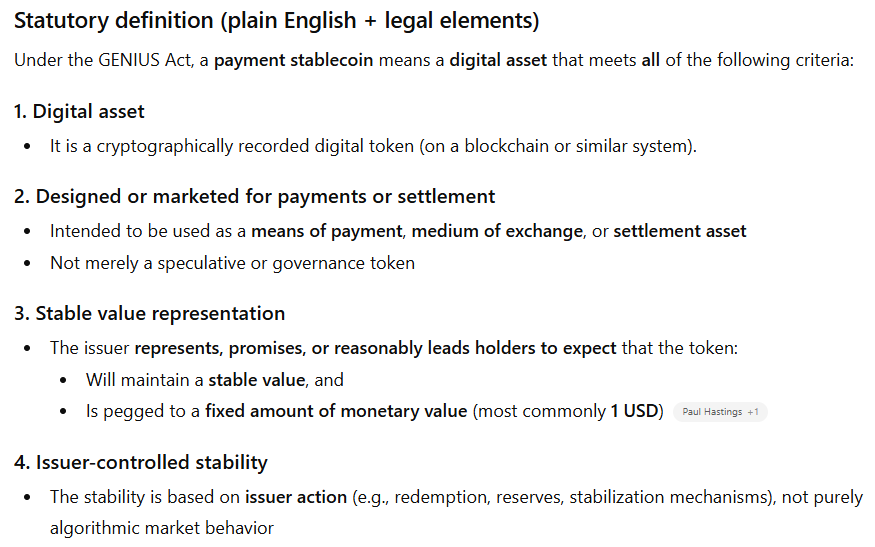
MCK easily meets all four criteria for being a payment stablecoin. ChatGPT notes that “calling it a “token,” “protocol dollar,” “synthetic USD,” or “DAO-issued asset” does not avoid classification. Bobby and supporters probably feel they can escape this classification by referring to DDD as “vouchers” or “gift cards” but mere terminology will probably not be sufficient to escape stablecoin classification.
Now that we’ve established that DDD is creating payment stablecoins, what are the legal requirements for a company that wants to do this? Again we ask ChatGPT if it is OK for a business to create payment stablecoins.
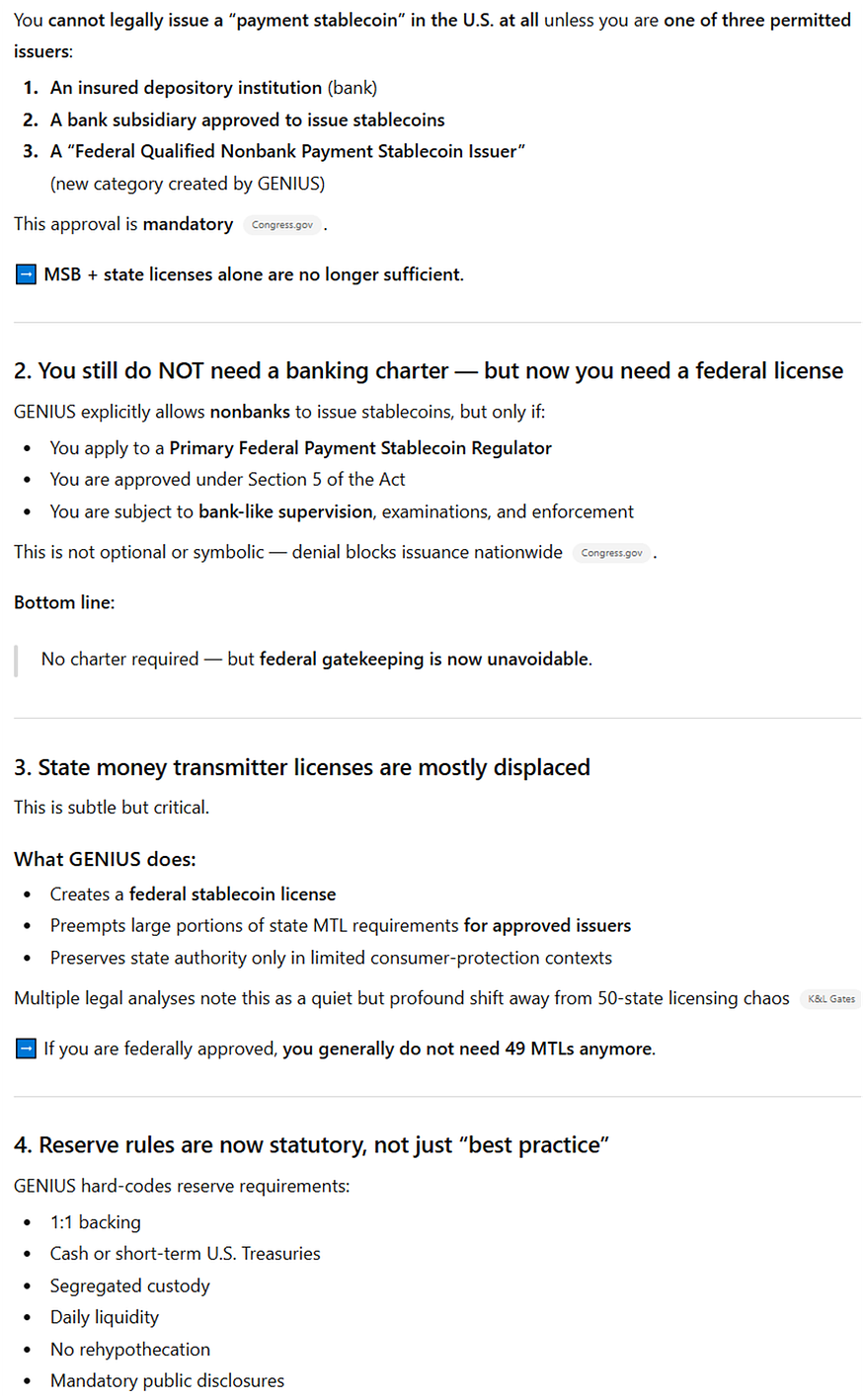
It is not a trivial matter to a legal issuer of payment stablecoins. Bobby and Texitcoin have announced no plans to acquire federal licenses or banking charters. In fact, in Bobby’s example, he doesn’t even intend to back the MCK 1:1 with USDC. In the example, only 95.2% of the MCK is backed with USDC.
Perhaps the most important part of the answer:
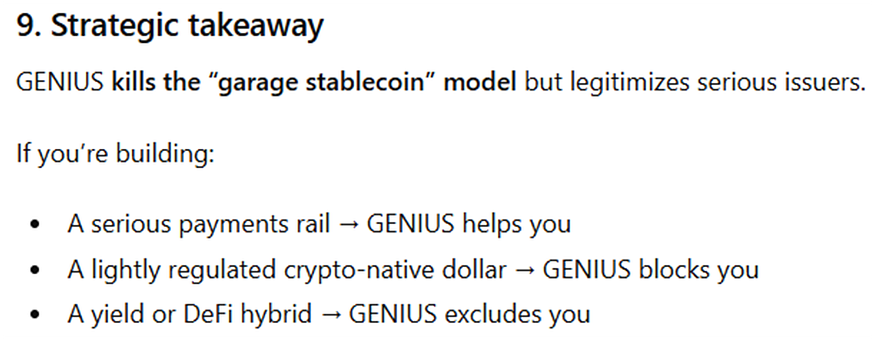
DDD likely falls under the second bullet, and is clearly blocked (prohibited) by GENIUS act.
But that’s not the only pitfall. Once you get into the stablecoin realm you have to be very careful not to become a money transmitter. Now we ask ChatGPT how one can “accidentally” become a money transmitter where I believe DDD could easily fall into this trap. We ask ChatGPT “explain where stablecoin issuers accidentally become money transmitters” and these are the most pertinent answers for DDD:
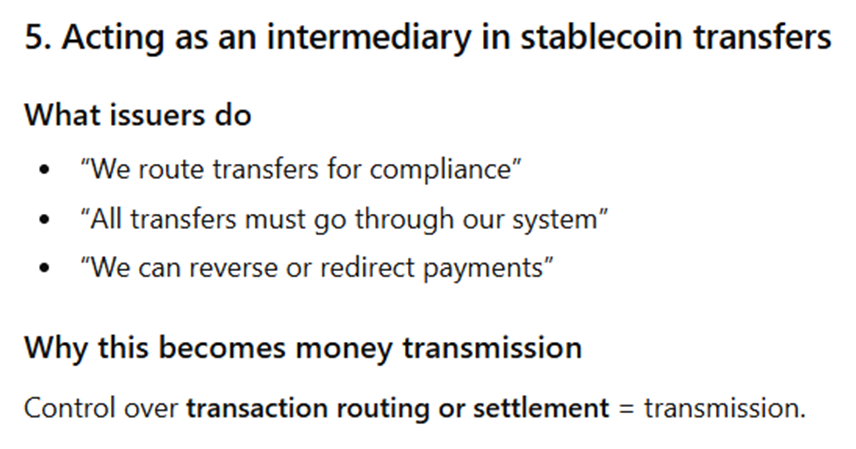
The key in this answer is that “we can reverse or redirect payments.” Because Texitcoin is a centralized blockchain and Bobby Gray has 100% control over the chain’s consensus and can update the software at will, he has the ability to reverse or change transaction. Just having this ability appears to qualify DDD as a money transmitter.
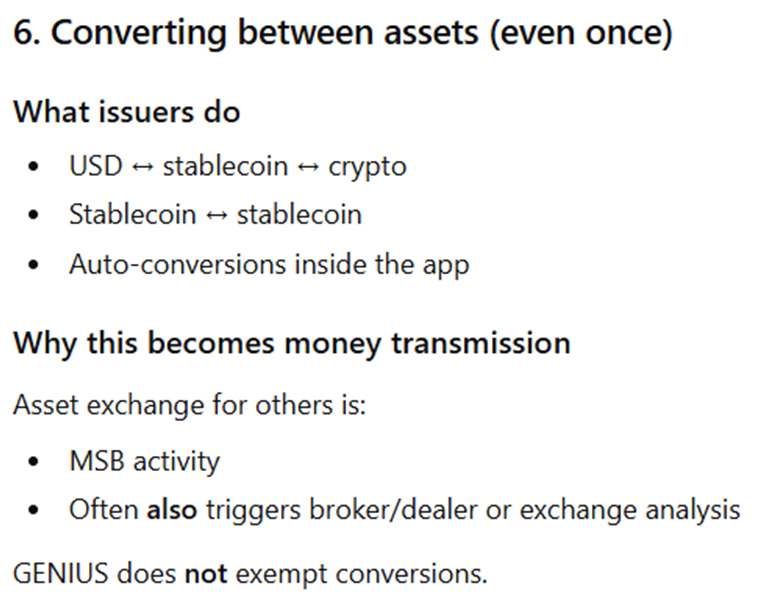
Bobby explains that MCK will be redeemable for USDC. This falls under the second bullet (stablecoin ← → stablecoin) above. To be compliant, MCK would have to be directly redeemable for US dollars and only US dollars. It is unclear how DDD will provide this service.
Why is “money transmitter” status important? Money transmitters are required to comply with a whole new set of regulations to operate including full Know-Your-Customer and Anti-Money-Laundering (KYC/AML) compliance. These cumbersome regulations require providers to obtain and verify customer identification and report suspicious transactions.
Doomed Business Model
An examination of the business model shows that profit margins are very slim and probably unsustainably small. The example provided in the video is non-compliant with the GENIUS act in that it creates more MCK than it has for backing in USDC. Even if that is somehow allowed, the model becomes capital intensive as the project grows. Here’s an example of a $100 purchase of MCK from a customer:
1. Customer spends $100 on credit card, receives 105 MCK + $1 of TXC.
2. DDD incurs 3% credit card fee ($3) and spends $1 to purchase $1 of TXC.
3. DDD purchases 100 USDC to hold in reserves.
At this point, DDD has now incurred an expense of $4 to provide this service. Then in the future the merchant or buyer redeems the 105 MCK:
4. DDD releases 94.5 USDC to the redeemer and keeps 5.5 USDC. After repaying the $4 expense above, is left with $1.50.
In this scenario, the net profit is $1.50, or 1.5% after locking up 4% in value while the MCK circulates. To put this in real terms, if DDD were to sell 100M MCK, they would have to lock up $4M to make a gross profit of $1.5M. If DDD decides to fully back their stablecoins, they would have to lock up $9M to still gross $1.5M. At some point as the business grows, they will run out of money. Further, as the stated selling point of community currencies is to keep the money circulating in the community as long as possible, DDD will be pushing for the coins to be redeemed because only at that point can the profit be booked. The longer the MCK circulates, the longer DDD has to float 4%. There are profit opportunities to earn interest on the entire USDC balance, but it is unclear how much that will amount to.
Do Businesses Want Their Bank Balances to be Public?
In the video, Bobby is quite proud of how open and transparent DDD will be compared to its competitors but he fails to address that this may be its biggest weakness. How many businesses want to expose their transaction volume and balances on a public ledger? Granted it won’t exactly be easy to see what wallets belong to what business, but for the motivated this information will be available because it’s all on public ledger.
Conclusion
Bobby gleefully exclaims, “No one has ever done this before!” And there’s probably a good reason for that. It’s a lot of work for very little payment fraught with piles of legal regulation and compliance. Profit margins are slim when you have to deduct the legal, administrative, marketing, and tech support expenses. This does not appear to be a promising endeavor.
2 responses to “Texitcoin’s Downtown Digital Dollar Disaster Will Not Work”
Blowing out someone else’s candle does not make yours burn brighter. This is a hack job due to being jilted by someone. Very easy to poo-poo a visionary’s mission to do something NEW to make life better for others. If it fails – the journey can also be worth it and learned from.
I’m not sure “blowing out someone else’s candle” is the same thing as raising legitimate concerns. These things are legal and technical minefields and most people don’t understand what questions they should be asking. The response shouldn’t be an offense that someone is asking questions but instead to use it as constructive criticism to grow and improve and correct. The problem with “if it fails” is that the stakes are really high for event planners and public officials. They can’t afford to hire a service that isn’t legally compliant. Don’t you think it’s worth it if that mistake can be prevented?